Key takeaways
16 Del. C. Chapter 66D requires damper testing after installation, then every 4 years (6 for hospitals).
Dedicated smoke control systems are tested twice a year; non-dedicated systems once a year.
Testers need an ICB HVAC Fire Life Safety certification and an insured employer.
Certificates go to the Fire Marshal within 30 days, with a lobby notice. Late filing can cost 100 dollars a day.
Who it applies to
Every building with HVAC fire dampers, smoke dampers or a smoke control system must run a damper and smoke control inspection program, with two exceptions. Homes for two or fewer families are excluded. Other residential buildings, including hotels, only have to test dampers in mechanical rooms and common areas such as stairs, hallways and lobbies.
What must be tested
Under 16 Del. C. Chapter 66D, dampers are tested after installation, then every 4 years, or every 6 years for hospitals. Dedicated smoke control systems are tested twice a year; non-dedicated systems once a year.
The law adds two points owners often miss:
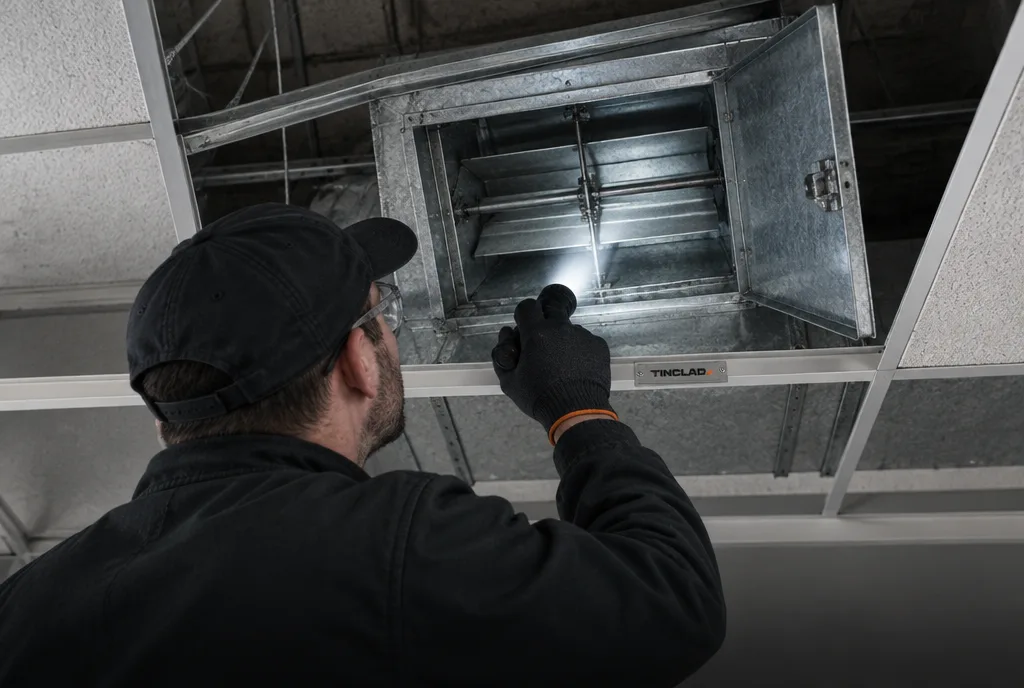
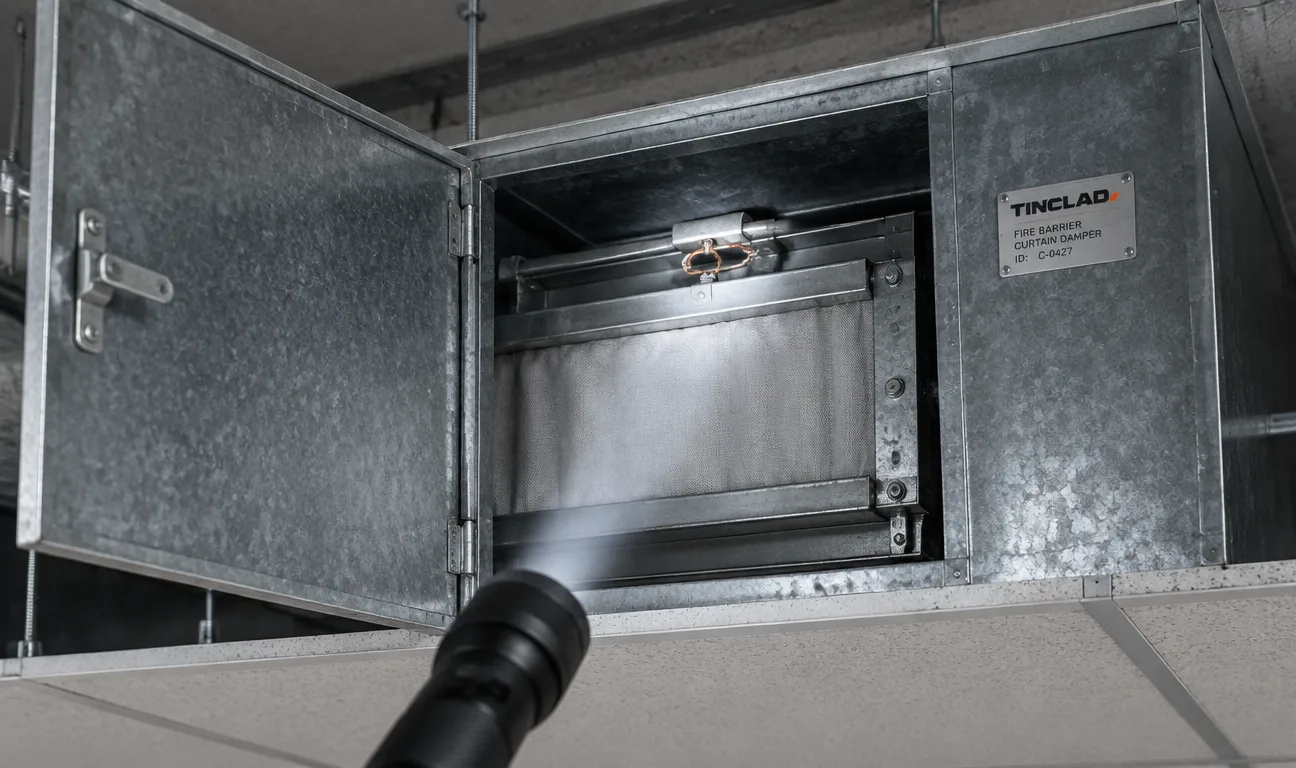
Visual inspection is required. Each periodic test must include the visual inspection method in NFPA 80 and NFPA 105. Remote inspection cannot replace it.
Every damper counts. All fire and smoke dampers are tested on the schedule, regardless of location.
Smoke control tests must confirm that airflow and pressure differences meet code across smoke barrier openings, at makeup air supplies and at smoke exhaust equipment.
Who may test
Testers must hold an ICB HVAC Fire Life Safety certification and work for an insured contractor, unless they are fire department staff.
The statute also accepts an equivalent certification accredited under ISO/IEC 17024. The contractor must employ and supervise the technician and carry current workers' compensation insurance.
What the paperwork must show
When dampers pass, the tester signs a certificate of operation. It must list the tester's name and certification number, the employer, the owner's name, the property address, the location of every damper and smoke control system tested, and the test date. The owner keeps a copy on the property.
When something fails, the tester writes a deficiency report with the same details plus the nature of each problem. The owner must start repairs without delay. A building that is not back in compliance within 30 days is in violation.
How to file
Certificates go to the State or local Fire Marshal within 30 days, with a notice posted in the lobby.
The 30 days run from the date you obtain the certificate. The lobby notice goes in the outside lobby window or another spot the public can see. It must show the building address, the date of the last fire damper, smoke damper and smoke control inspections, and when each one expires. The Fire Marshal also checks your certificate during the annual fire inspection.
Penalties
Late filing can cost 100 dollars a day.
The fine is a civil penalty of 100 dollars for each day of noncompliance with any part of the chapter, paid to the Office of State Fire Marshal. A missed repair deadline or missing lobby notice can run up the same daily fine as a late filing.
Common failures
Certificates filed late, or never sent to the Fire Marshal
No lobby notice, or one with expired dates
Dampers with no access door, so no visual inspection is possible
Failed dampers still open on a deficiency report after 30 days
How Tinclad helps
We do not offer damper testing or damper repair in Delaware yet. We can help you inventory your dampers and plan around the 4-year cycle and the 30-day filing deadline, so you are ready when your certified tester arrives. We serve northern Delaware with fire door inspection and firestop inspection. Get a quote for your Delaware building.
Frequently asked questions
Get a written scope in 2 business days
Code library