NFPA 80 §5.2 · NFPA 105 · NFPA 101 · IFC 705 · K211
What we check on every door
NFPA 80 lists 13 items for swinging fire doors. We check all of them, on both sides of the door:
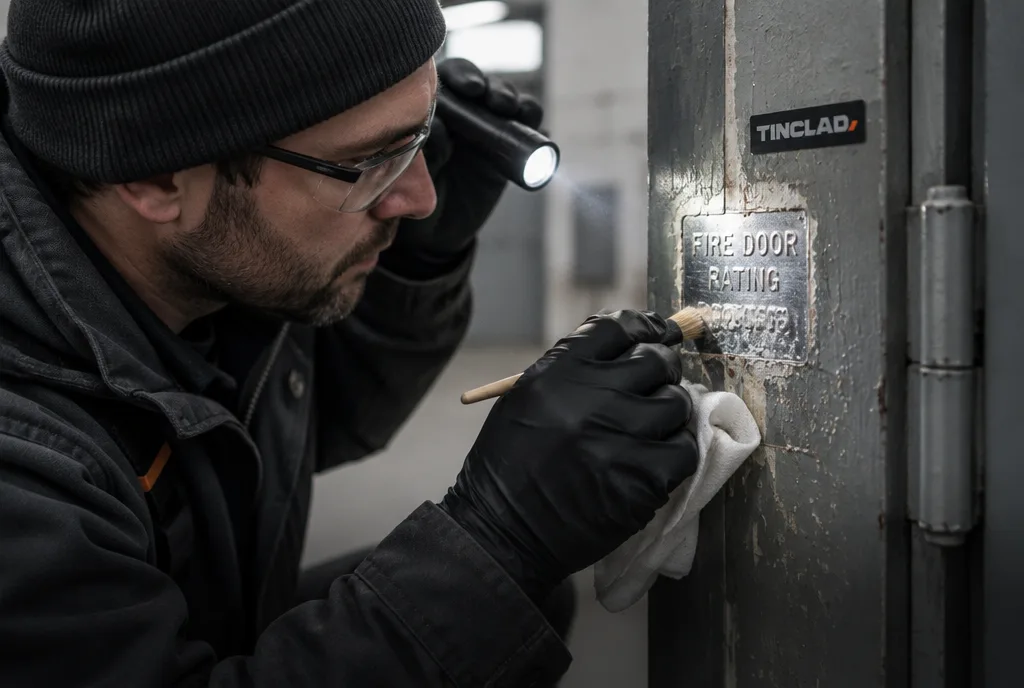
Labels on the door and frame are present and legible
No holes or breaks in the door or frame
Glass, glass kits and their beads are intact and secure
Door, frame, hinges, hardware and threshold are secure, aligned and working
No missing or broken parts
Clearances are within limits: 1/8 inch at the head and edges, and 3/4 inch at the bottom for most doors
The closer shuts the door fully from the full-open position
The coordinator closes the inactive leaf first on pairs
The latch engages every time
No added hardware that stops the door from closing or latching
No field changes that void the label
Gaskets and edge seals are present and intact where required
Signs on the door meet the size and attachment limits
We also note hold-open devices, door position, kick plate heights and anything else your surveyor tends to flag.
How it works
Count and map. We use your life safety drawings, or build a door list if you have none.
Tag and test. Each opening gets a durable ID tag on the hinge-side frame, a full 13-point test and photos.
Fix and report. We fix small failures on the spot. You get the report in 5 business days, with a priced plan for the rest.
What you get
One line per door: ID, location, rating, result, deficiency, code section, photo
Pass rate by building, floor and wing
Repairs priced line by line and sorted by risk
A signed inspection record that meets NFPA 80 §5.2.3, kept for the authority having jurisdiction
PDF, spreadsheet and client portal access. Next year we start from your door list, not from zero.
Fixed on the same visit
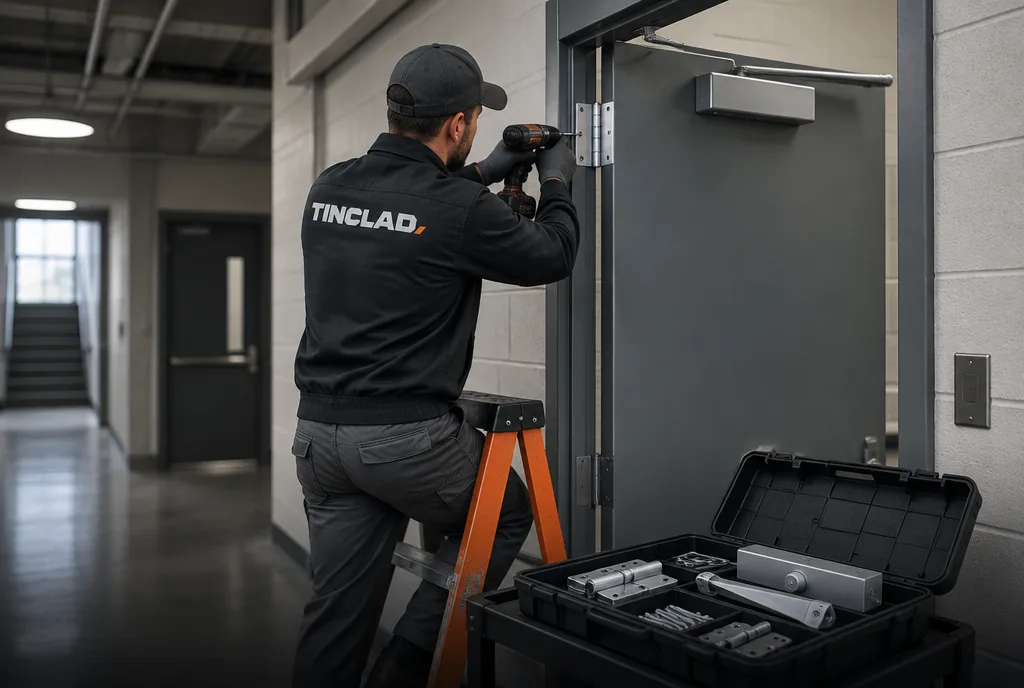
Our vans carry the parts that fix most failures: steel fasteners and thru-bolts, hinge and strike shims, closer and latch adjustments, silencers, gasket and edge seal, and missing screws. If a door fails for one of these, it usually passes before we leave the floor.
The codes behind it
Code | What it requires |
|---|---|
NFPA 80 §5.2 | Inspect and test every fire door assembly at least once a year; keep a signed record |
NFPA 105 | Smoke door assemblies, inspected with NFPA 80 methods |
NFPA 101 (2012) | Life Safety Code that CMS enforces in healthcare buildings |
IFC 705 | Opening protectives must be inspected and maintained to NFPA 80 |
CMS S&C 17-38 | Annual fire door testing in healthcare; failures cited under K211 |
Frequently asked questions
Get a written scope in 2 business days
Services