NFPA 80 · K211 · PE.03.01.01
Why fire doors fail
Most fire doors fail from daily use, not from fire. Carts hit them. Staff prop them open. Closers drift out of adjustment, hinges sag under the weight of the door, and someone adds a lock or a sign with screws through the face. Each small change can stop a door from closing and latching on its own, and a door that does not latch will not hold back smoke.
What we repair
Gaps at the head, edges and bottom
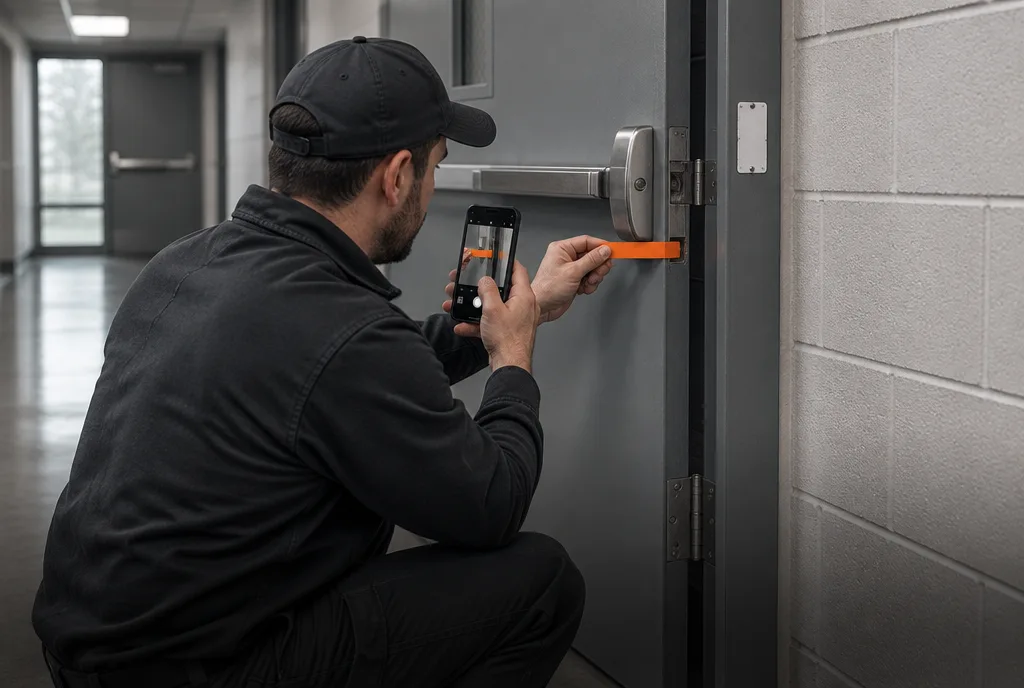
Closers that do not close or latch the door
Latches, strikes and exit devices that do not engage
Bent, sagging or loose hinges
Holes from removed hardware, filled the way NFPA 80 allows
Missing or torn gaskets, edge seals and astragals
Coordinators on pairs of doors
Hold-open devices wired to release on alarm
Non-compliant kick plates, signs and add-on hardware
What the code expects
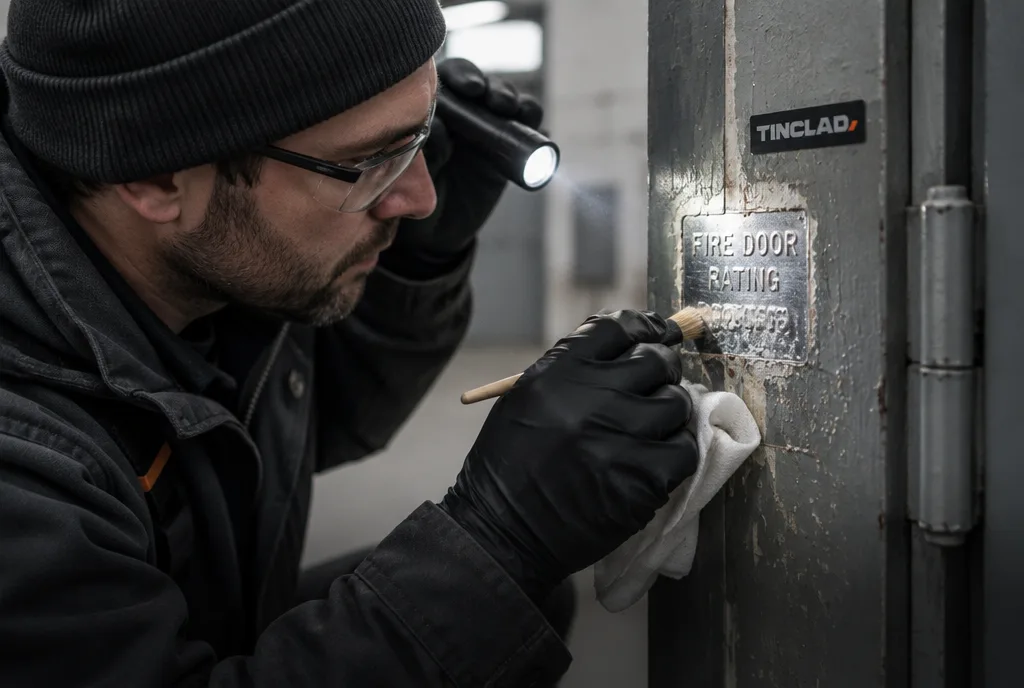
NFPA 80 says defects that could interfere with a fire door's operation must be corrected without delay. It also limits how a rated door may be changed in the field. Repairs must use listed parts and methods, or the label stops counting. In healthcare, CMS cites failed doors under K211, and The Joint Commission scores them under PE.03.01.01. Our NFPA 80 fire door inspection guide walks through the full list of what an inspector checks.
When a door must be replaced
Some damage cannot be repaired without voiding the label: wrong-size cut-downs, unlisted glass, large holes, or a door that no longer fits its frame. Then we replace the door, frame or both with listed parts, and you get the new label numbers in your report.
How a repair visit works
Start from the report. Ours or another firm's. We price every line.
Fix in order of risk. Egress paths, smoke barriers and hazardous rooms come first.
Re-inspect and close out. Every repaired door gets a new 13-point test, photos, and a closed status in your report and portal.
Repairs from another company's report
You do not need to start over. Send us the report and we will price the fixes and re-inspect each door after the work.
What you get
One line per repaired door: ID, location, what failed and what we did
Before and after photos
The re-test result and a closed status for each door
New label numbers for any door or frame we replaced
That record is what you hand a surveyor or the fire marshal. If a survey has already cited you, our Priority Repair for survey citations plans the work back from your deadline.
Who we repair doors for
We fix fire doors in occupied buildings every week. Read how we handle fire barrier compliance for hospitals and fire door inspection for senior living, where work has to fit around patients and residents. Have a list of failed doors? Get a fire door repair quote.
Frequently asked questions
Get a written scope in 2 business days
Services