Key takeaways
NFPA 80 requires every fire door assembly to be inspected and tested at least once a year.
Swinging fire doors are checked against 13 items, on both sides.
The inspection needs a signed written record kept for the authority having jurisdiction.
Doors must also be inspected after installation and after any repair.
CMS enforces the 2010 edition through the 2012 Life Safety Code. A 2025 edition exists, but it applies only where your local authority adopts it.
What does NFPA 80 require?
Inspection and testing of every fire door assembly at least once a year, plus after installation and after maintenance work. The work is done by a person who knows the door's operating parts, and the results are recorded and kept.
What are the 13 inspection points?
Labels on the door and frame are present and legible
No holes or breaks in the door or frame
Glass, glass kits and their beads are intact and secure
Door, frame, hinges, hardware and threshold are secure, aligned and working
No missing or broken parts
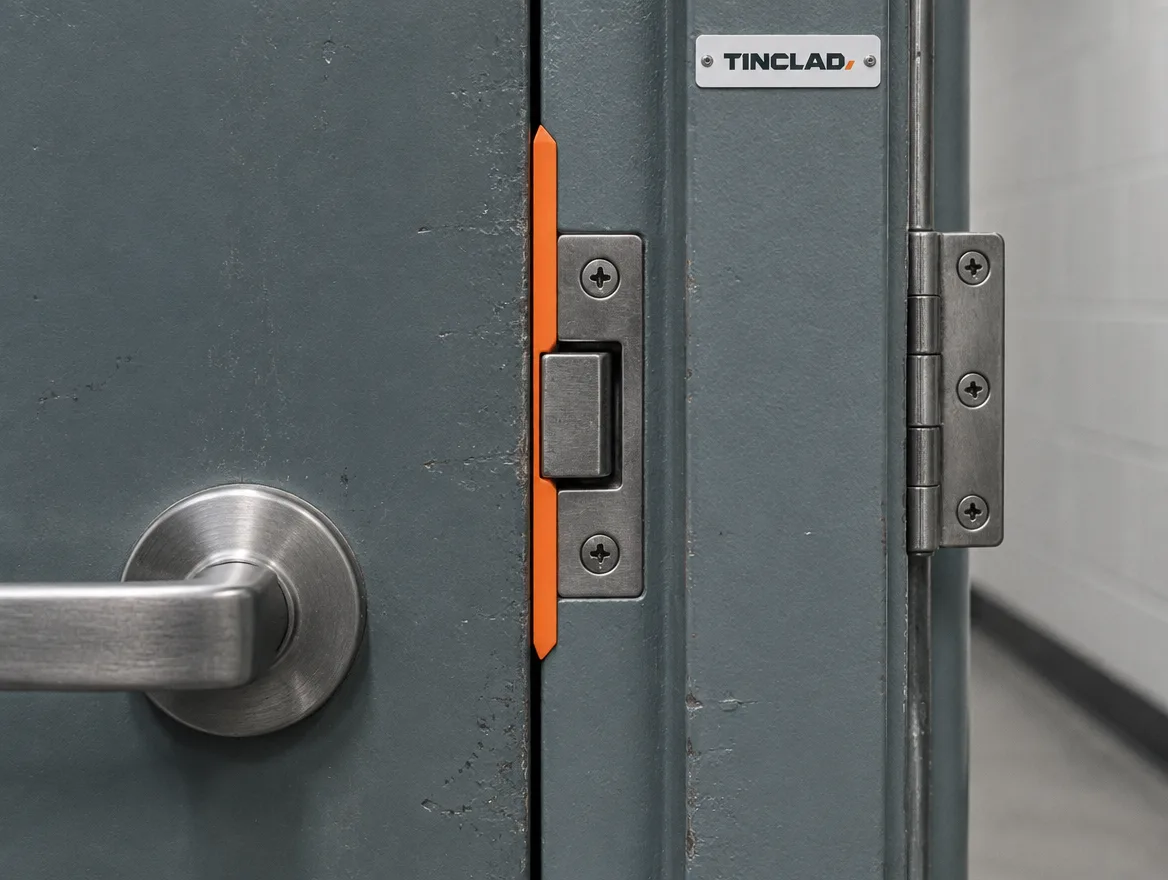
Clearances are within limits: 1/8 inch at the head and edges, and 3/4 inch at the bottom for most doors
The closer shuts the door fully from the full-open position
The coordinator closes the inactive leaf first on pairs
The latch engages every time
No added hardware that stops the door from closing or latching
No field changes that void the label
Gaskets and edge seals are present and intact where required
Signs on the door meet the size and attachment limits
What gaps are allowed?
For most swinging fire doors: 1/8 inch at the head, hinge and latch edges and between the leaves of a pair, and up to 3/4 inch at the bottom with no threshold. Wood and steel tolerances differ slightly; we measure every edge.
Who can inspect fire doors?
NFPA 80 does not name a certificate. It calls for knowledge and understanding of the door's operating parts. Owners and accreditors look for proof of that knowledge, so most hire inspectors with DHI's FDAI or a similar credential.
What must the report include?
The date, the facility, the inspector, a record of each door with its ID and location, its type, the result of the visual and functional checks, and every deficiency found.
What happens if a door fails?
Repair it with listed parts, without field changes that void the label, then re-inspect and record the result.
Which edition applies to me?
Healthcare buildings under CMS: the 2010 edition, through the 2012 Life Safety Code. Other buildings: the edition your local fire code adopts. Ask us; we check this for every new client.
Frequently asked questions
Get a written scope in 2 business days
Code library