Key takeaways
P.L.2023, c.186 was signed on December 21, 2023 and took effect one year later.
Owners must inspect and test dampers under the Uniform Fire Code and keep a written schedule.
Passing dampers get a compliance certificate; failures get a deficiency report.
The law creates a damper contractor class that needs ISO/IEC 17024 certification, a training program and a state permit.
What the law requires
New Jersey's Fire Life Safety Damper and Smoke Control System Inspection Verification Act (P.L.2023, c.186) was signed on December 21, 2023 and took effect one year later. Owners must inspect and test dampers under the Uniform Fire Code and keep a written schedule. Passing dampers get a compliance certificate; failures get a deficiency report.
The law does not set its own test interval. It points to the standards adopted under the Uniform Fire Code, and those standards are NFPA 80 for fire dampers and NFPA 105 for smoke dampers. Under those standards, dampers are tested one year after installation, then every 4 years, or every 6 in hospitals. See our fire damper testing schedule.
Who it applies to
The owner of almost any building with fire, smoke or combination dampers. The law exempts single-family, two-family and attached single-family homes used only as dwellings. Buildings with a smoke control system must also have that system tested under the Uniform Fire Code standards.
The deficiency report must name the problem and the reason it does not comply. The law leaves further detail, such as who receives certificates and how fast repairs must happen, to state rules.
Who may test dampers
The law creates a damper contractor class. Contractors need ISO/IEC 17024 certification, a training program and a state permit.
In detail: the new Smoke Damper, Fire Damper, and Combination Fire and Smoke Damper Contractor class must take part in an apprenticeship or skill training program registered with the U.S. Department of Labor or a state apprenticeship agency, and hold a certification from an organization accredited under ISO/IEC 17024, or a substantially similar certification the state accepts. A business that is not itself a certificate holder needs a fire protection contractor business permit and must employ a certificate holder. Smoke control system contractors are a separate class with similar rules.
When enforcement starts
The enforcement date depends on state rulemaking. Check with the New Jersey Division of Fire Safety for the current status.
The law lets the Commissioner of Community Affairs set, by rule, the date after which only certified contractors may inspect and service dampers. The Division of Fire Safety proposed rule changes to N.J.A.C. 5:74 in 2024. Until the Division announces a date, confirm the current status with it before you plan around one.
Common gaps we see
No damper inventory, or one copied from old drawings
No written testing schedule
Test records with no location or no record of the fix
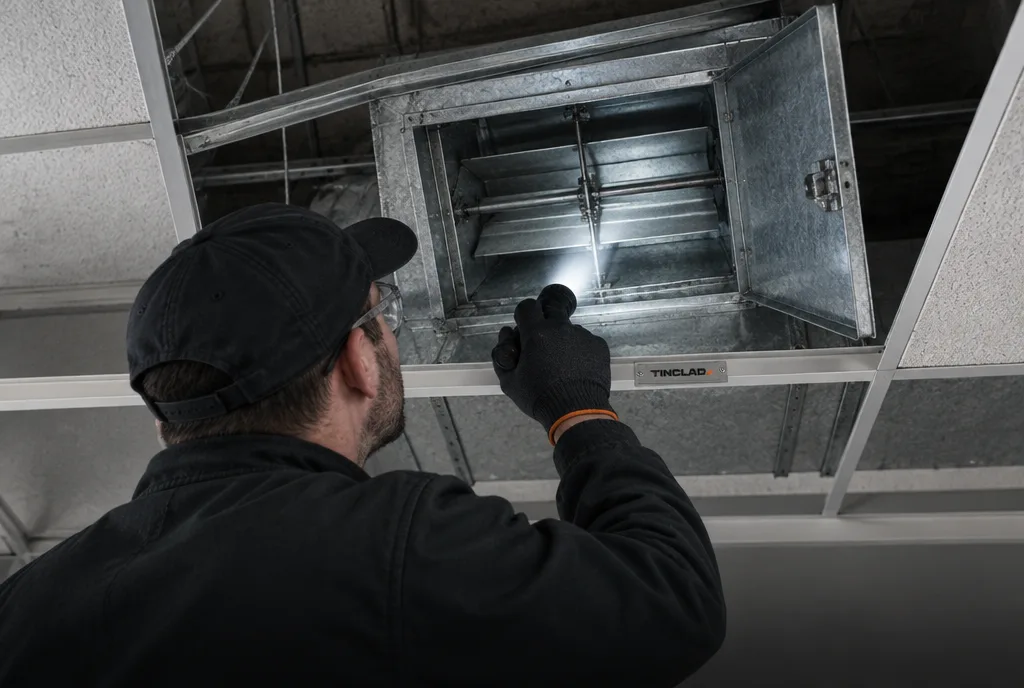
Dampers with no access door
How to document it
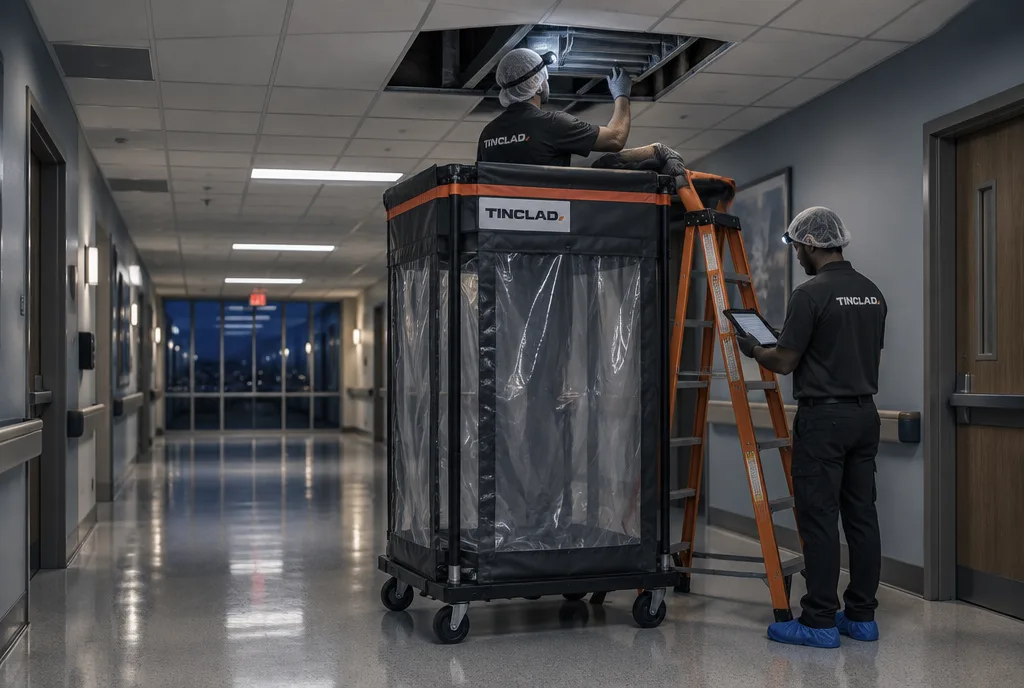
Keep the written schedule, every compliance certificate and deficiency report, and proof of each repair and retest in one place. Each record should show the damper location, the test date, who tested it and what was found. Your local fire official and, for nursing homes, the New Jersey Department of Health surveyors should be able to trace any damper from your list to the ceiling.
What owners should do now
Count and locate every damper, set up a written testing schedule, and keep records of every test and repair, so you are ready when enforcement begins. We do not offer damper testing in New Jersey yet, while our damper contractor registration is pending. Until then, we inspect and repair fire doors and firestop in New Jersey and help you plan your damper testing.
How Tinclad helps
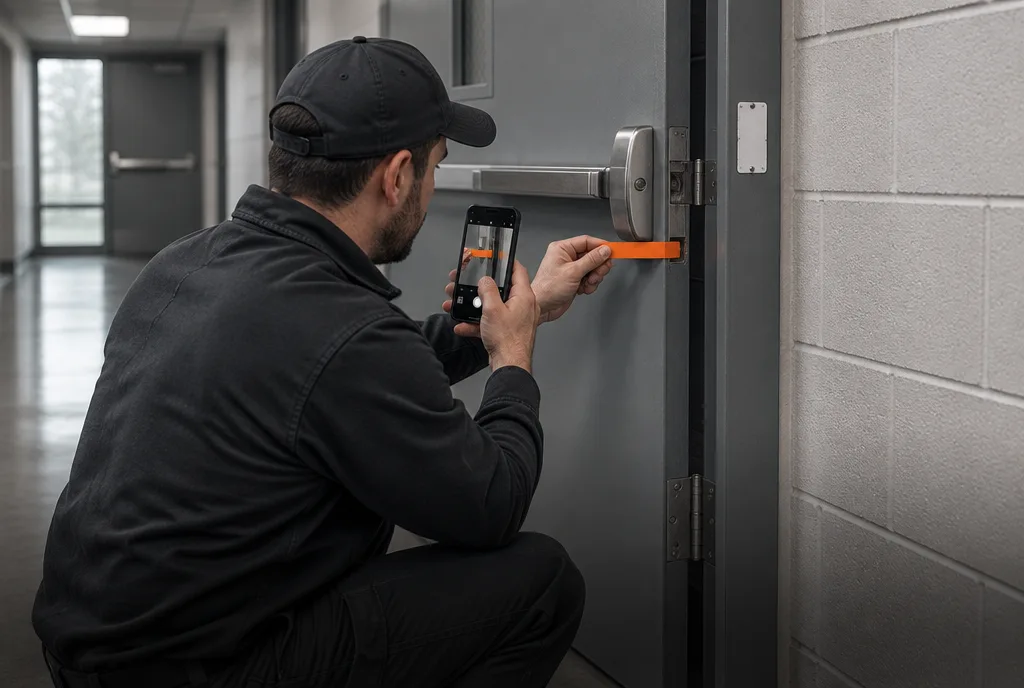
In South Jersey, we handle fire door inspection, fire door repair and firestop inspection today, and we can help you build the damper inventory and schedule the law asks for. Get a quote for your New Jersey building.
Frequently asked questions
Get a written scope in 2 business days
Code library