Key takeaways
Test every fire, smoke and combination damper one year after installation.
After that, test every 4 years. Hospitals may test every 6 years.
The 6-year interval is for hospitals only, not nursing homes or surgery centers.
Philadelphia, New Jersey and Delaware add certified-tester and record rules.
The schedule at a glance
Damper type | Standard | First test | Then |
|---|---|---|---|
Fire damper | NFPA 80 | 1 year after install | Every 4 years (6 in hospitals) |
Smoke damper | NFPA 105 | 1 year after install | Every 4 years (6 in hospitals) |
Combination fire/smoke | NFPA 80 and NFPA 105 | 1 year after install | Every 4 years (6 in hospitals) |
Who this applies to
Any building with fire, smoke or combination dampers in its ductwork or air transfer openings. For healthcare buildings under CMS, the 2012 Life Safety Code points to NFPA 90A, which sends fire dampers to the 2010 edition of NFPA 80 and smoke dampers to the 2010 edition of NFPA 105. Those editions set the 1-year, then 4-year cycle, with the 6-year allowance for hospitals. Other buildings follow the editions your local fire code adopts.
What a damper test includes
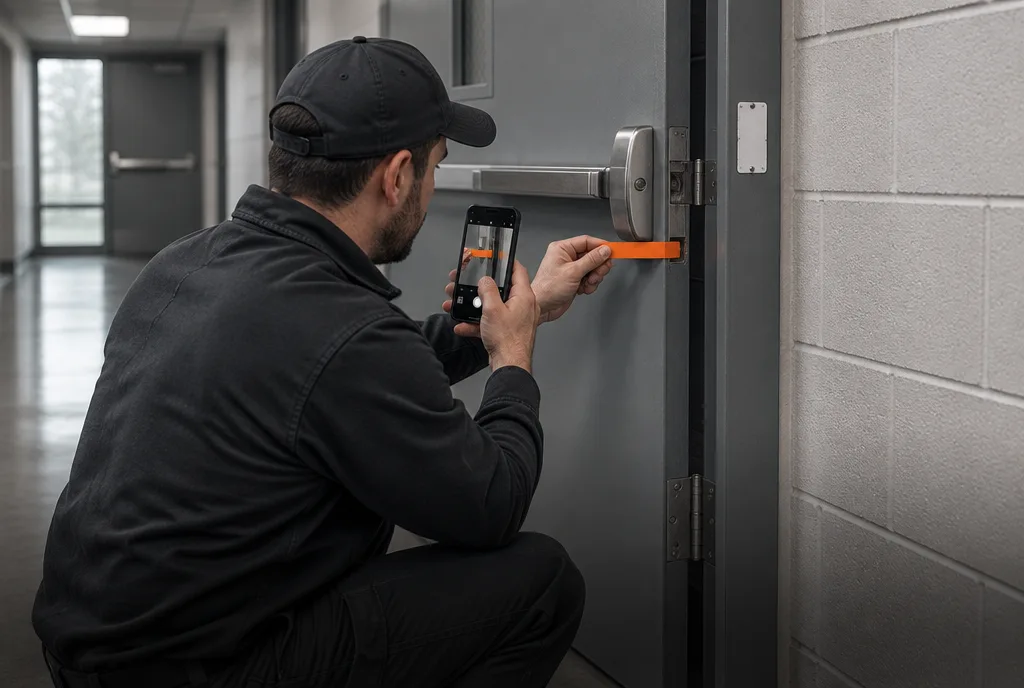
Full access, removal of the fusible link to confirm full closure, actuator test for smoke dampers, a check for obstructions and corrosion, and a record of location, date, inspector and deficiencies.
In practice, that means:
Access. A working access door next to the damper. NFPA 90A requires one, and the damper cannot be tested without it.
Fire dampers. Remove the link, let the damper close fully and lock if it has a latch, then reset it. A painted or damaged link gets replaced with one of the same size, temperature and load rating.
Smoke dampers. Test with normal HVAC airflow. Cut power or signal to the actuator, confirm the damper closes fully, then confirm it reopens.
Condition. No rust, bent blades or bad hinges, nothing run through the frame, and nothing blocking closure.
Common failures
No access door, or one buried behind a hard ceiling
Painted or corroded fusible links
Blades stuck by rust, debris or paint
Cable or conduit run through the damper frame
Smoke damper actuators that do not drive the damper closed
Dampers missing from the drawings
When a damper fails, NFPA 80 calls for repairs to begin without delay, followed by a retest.
How to document it for the surveyor or AHJ
NFPA 80 and NFPA 105 require a record of each test: the damper location, the date, the inspector's name and the deficiencies found, with space to show when and how each deficiency was corrected. Keep these records for the life of the dampers. A surveyor should be able to pick any damper from the report and find it in the ceiling, and pick any damper in the ceiling and find it in the report.
Local rules
Philadelphia: Fire Code F-701.6.1 requires certification by a technician with a Philadelphia sheet metal license and a Fire and Smoke Technician/Engineer or Smoke Control certification. A licensed contractor files it through eCLIPSE. See our Philadelphia damper certification guide.
New Jersey: P.L.2023, c.186 requires owners to test dampers, keep a written schedule and use a certified damper contractor. See our New Jersey damper law guide.
Delaware: 16 Del. C. Chapter 66D requires certified testers and filing with the Fire Marshal within 30 days. See our Delaware damper law guide.
Can I spread testing across years?
Yes. Many owners test a quarter of their dampers each year, so every damper stays inside its 4-year window and the cost stays level.
How Tinclad helps
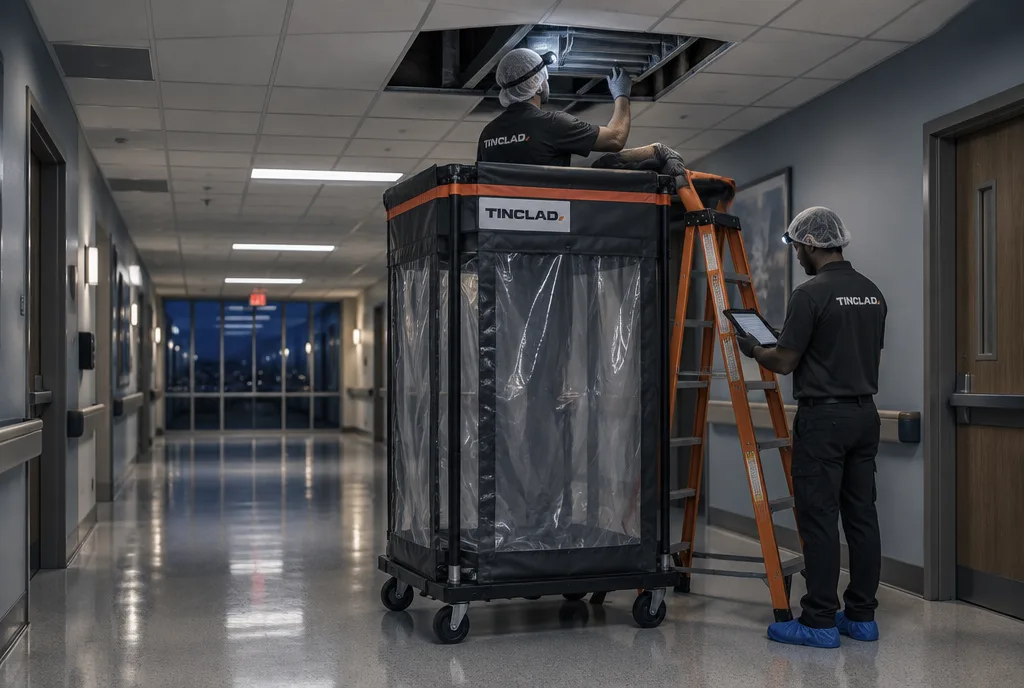
Our fire and smoke damper inspection starts from your drawings, then walks every rated wall and shaft to find what the drawings missed. Each damper gets an ID tag, a photo and a mark on your drawings. Dampers that fail go to damper repair and replacement, and many bad links are fixed before we close the ceiling. Send us your drawings and we will quote your damper testing.
Frequently asked questions
Get a written scope in 2 business days
Code library