Most buildings handle fire doors, dampers and firestop in a scramble before a survey. The Survey-Ready Program spreads that work across the year, on a calendar you see in advance, for a price you can budget. Here is what a typical year looks like, month by month. Your calendar will shift around your survey window and your buildings.
Before month one: the baseline
Every program starts with a baseline. We inspect everything once and build your full inventory: every rated door, every damper and every rated barrier, each tied to a location on your drawings. From that, you get a 12-month calendar and a fixed price.
The baseline is usually the hardest visit of the program. First-year failure rates are often high, because nobody has looked at every opening in one pass before. That is normal. We fix what we can on the visit and phase the rest by risk and budget.
Month 1: setup
You meet your lead tech, the one person who will know your buildings all year. Your inventory goes into the client portal, with every opening, its history and its status. Repair pricing is locked for the program year, so anything we find later is already priced. We also set the calendar around your survey window, your blackout dates and the hours we can work on each floor.
Months 2 to 4: annual fire door inspection
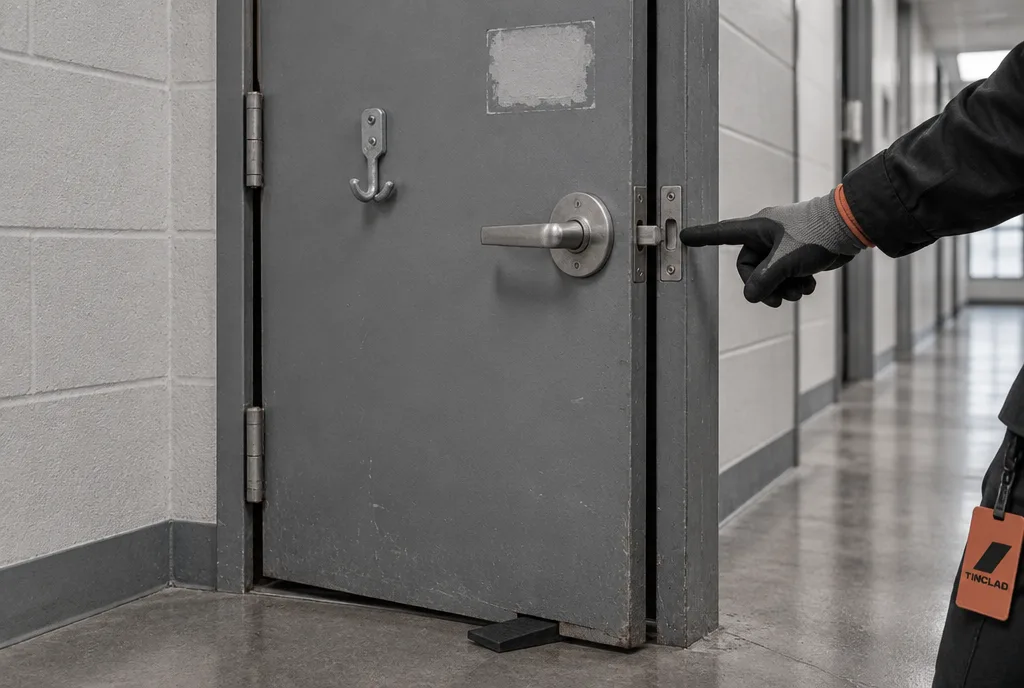
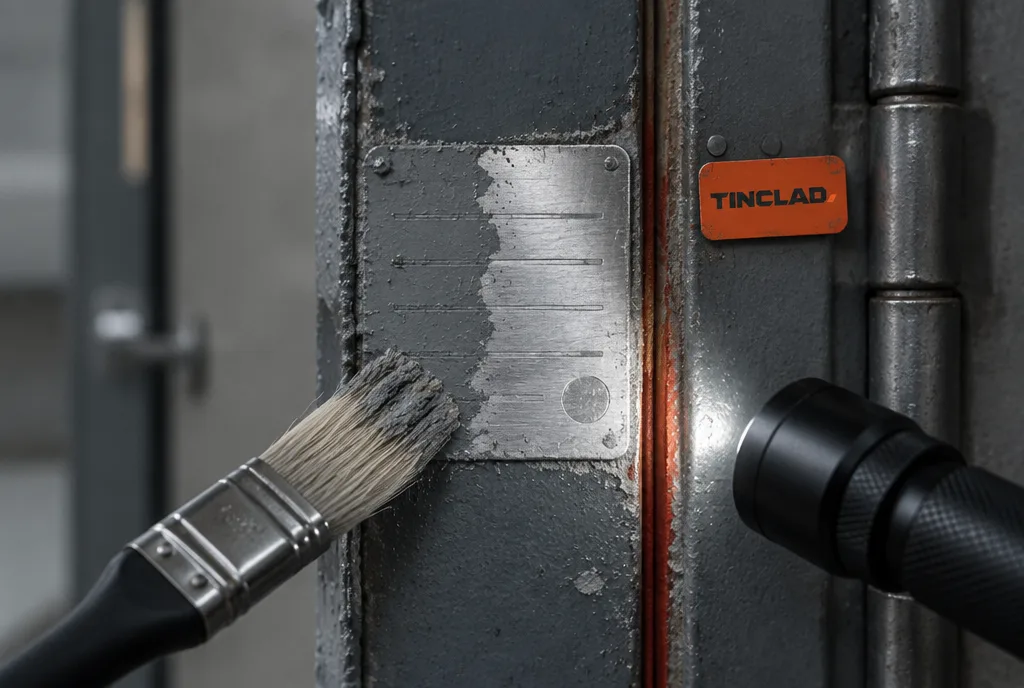
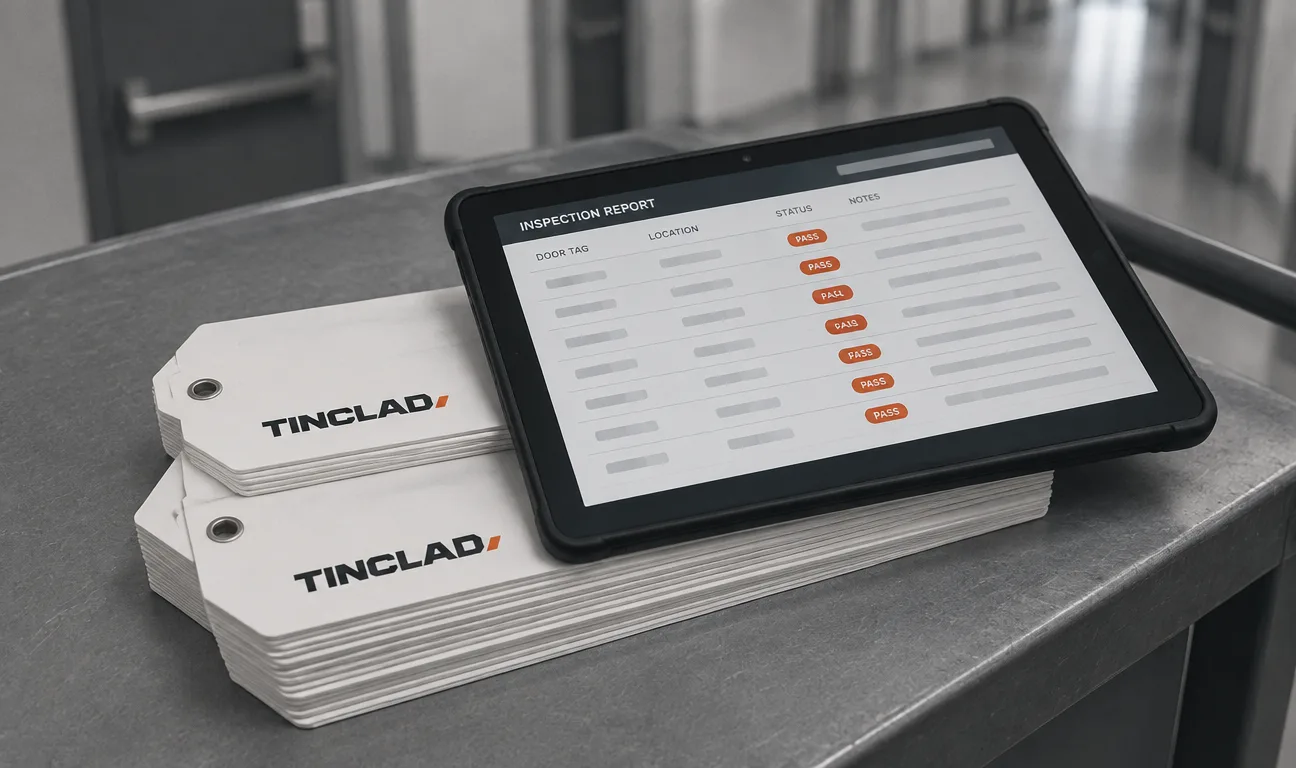
Every rated door is inspected and tested on both sides against the 13 NFPA 80 items, tagged and photographed. Small failures like latches, closers, shims and gaskets get fixed on the same visit. The report follows in 5 business days, with a priced plan for whatever is left. Because pricing is locked, approving repairs is a quick yes or no.
Months 4 to 6: repairs and close-out
Larger door repairs get scheduled and done. Each one is photographed and re-tested, and the portal updates as items close. The goal is to clear the open list well before your survey window.
Months 6 to 8: dampers on a rolling cycle
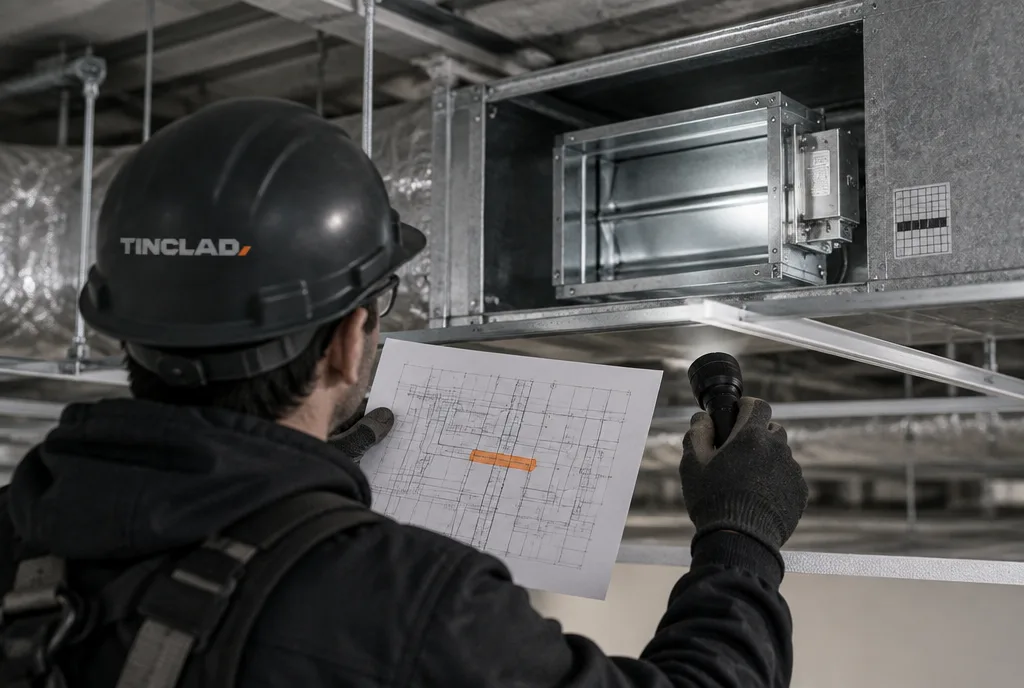
Dampers must be tested one year after installation, then every 4 years, or every 6 years in hospitals. Instead of testing them all in one expensive year, we test a quarter of your dampers each year on a 4-year cycle, or a sixth on a 6-year hospital cycle. Every damper stays current and the cost stays level. Each one is found, tested to full closure, tagged and marked on your drawings. A damper that fails for a bad fusible link usually passes before we close the ceiling.
Months 8 to 10: firestop survey by zone
We survey rated barriers above the ceiling, zone by zone, with the riskiest first: smoke compartments, exits and hazardous rooms. Small penetrations get sealed with listed systems as we find them. Larger work is priced line by line.
Months 10 to 11: the pre-survey walk
Before your accreditation or state survey window, we walk your barriers the way a surveyor would. A door that has drifted since the annual test, a new hole from last month's cable pull, a hold-open that no longer releases: we find them and close them first. If your survey window falls earlier in the year, this walk moves with it.
Any month: citations
If a surveyor, fire marshal or insurer cites you anyway, program clients get priority response. We walk the findings within 2 business days and give you a dated plan for your plan of correction.
Month 12: renew
The year ends with your records complete and your inventory current. Next year starts from that inventory, not from zero. The program runs one year at a time, renewable, with no payment up front for the full year.
Which level fits
Essentials covers fire doors in one building. Complete adds dampers, firestop and the pre-survey walk for one campus. Portfolio covers 3 or more sites, with an account manager and a portfolio dashboard. Most buildings start with Essentials and add the rest later.
What to do next
See how the Survey-Ready Program works, then send us a door count for a yearly price. Request a quote or call (610) 684-9715.
Insights