Most swinging fire doors fail their first NFPA 80 inspection. The good news: the same five problems cause most of those failures, and most of them are cheap to fix. Here is what we see in almost every building we walk, and what to do about each one.
1. The door does not latch
This is the most common failure we find. A fire door has to close and latch on its own, every time. If the latch does not engage, the door can be pushed open by fire pressure, and smoke moves straight through.
The cause is usually small: a strike plate that has shifted, a sagging hinge, or a closer set too soft. We carry hinge and strike shims and adjust closers and latches on the spot. Most of these doors pass before we leave the floor.
2. The gaps are too wide
For most swinging fire doors, NFPA 80 allows 1/8 inch at the head, the hinge and latch edges, and between the leaves of a pair. At the bottom, up to 3/4 inch with no threshold. Wood and steel doors have slightly different tolerances, so we measure every edge.
Gaps grow as hinges wear and buildings settle. Many can be closed with hinge adjustments and shims. If the door no longer fits its frame, it may need a listed replacement.
3. The label is painted or missing
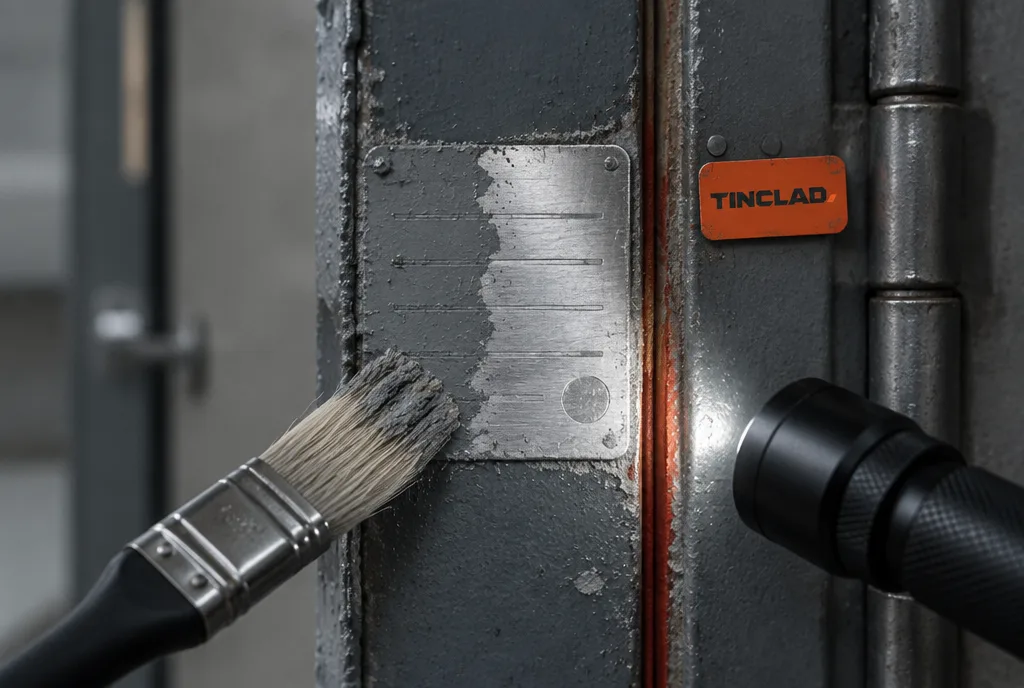
The label on the door and the frame is the proof that the opening was built and tested as a fire-rated assembly. Painters cover them. Maintenance removes them. Without a legible label, a surveyor cannot confirm the rating, so it gets cited.
Many painted labels can be cleaned. Missing labels need a listed agency to inspect the opening and apply a new one. We cover this in detail in our post on painted labels.
4. The closer does not close the door
A fire door must shut fully from the full-open position, not just from halfway. Closers lose adjustment, leak, or get disconnected because someone found the door "too heavy." We test from full open on every door and adjust or replace closers as needed.
5. Hardware or changes that void the label
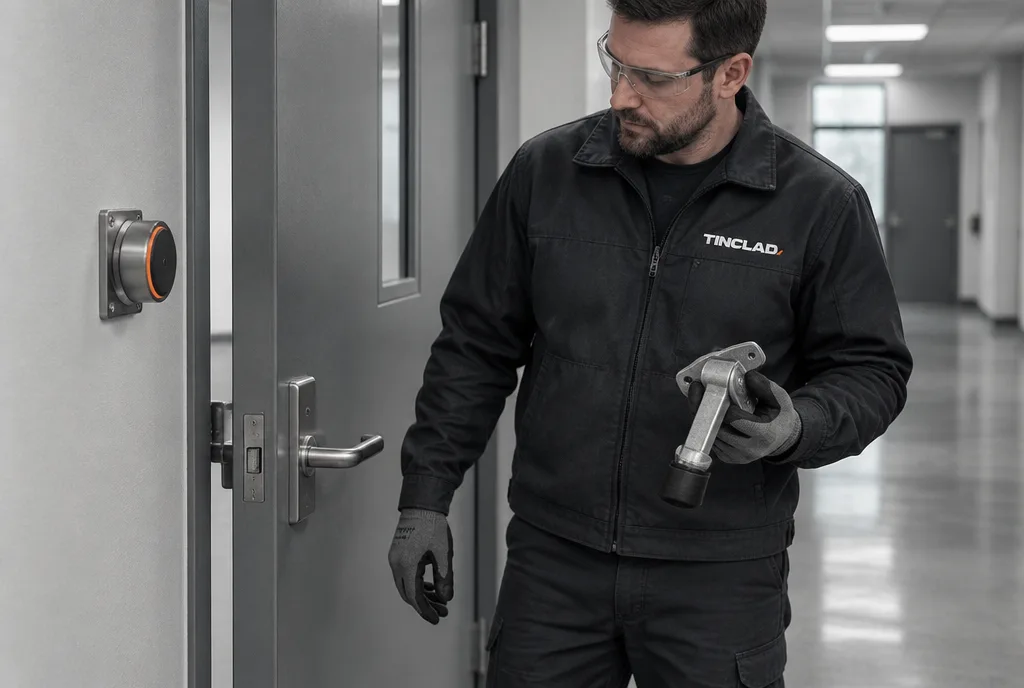
Over the years doors pick up things they should not have: added hardware that stops the door from closing or latching, unlisted glass, holes from old hardware, or a cut-down to clear new flooring. Some of these can be fixed with listed parts. Others void the label, and the door has to be replaced.
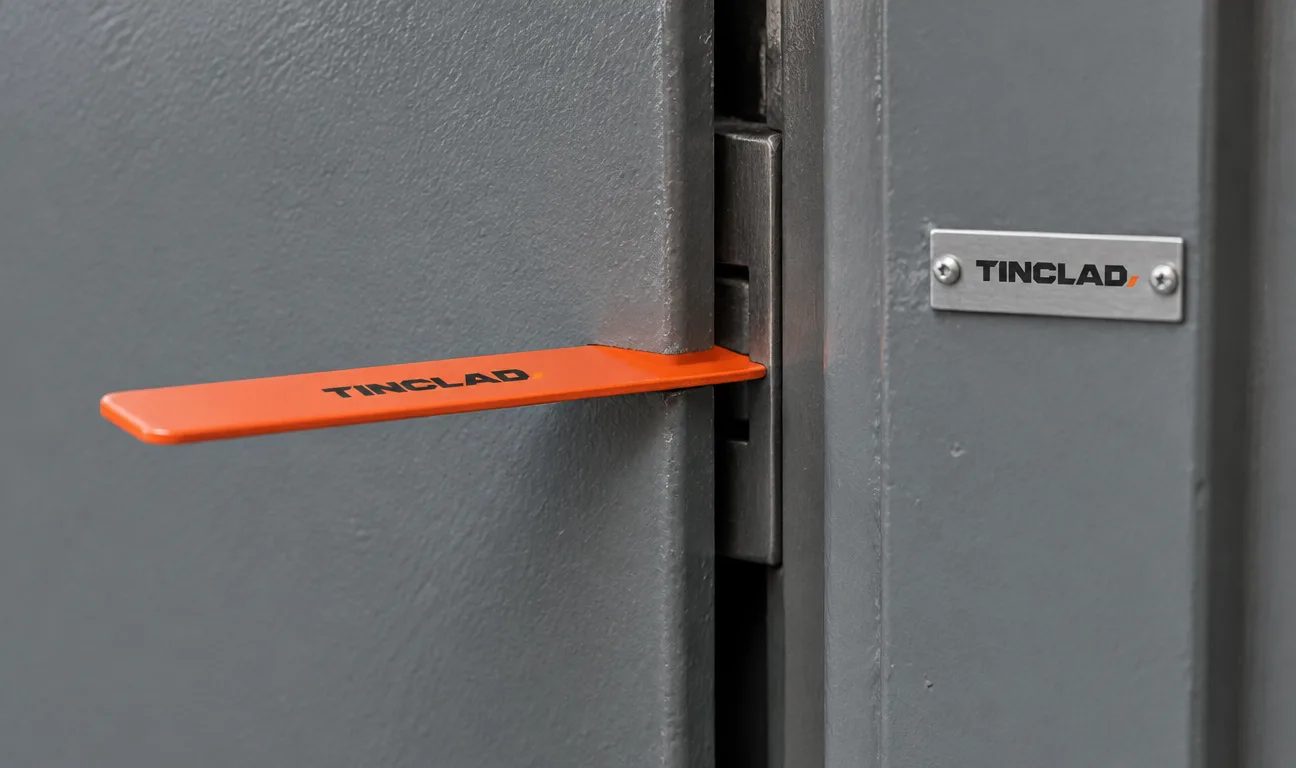
The same goes for propping doors open. A fire door can only be held open by a device that releases on alarm. Wedges and kick-down stops are not allowed, and surveyors look for them.
What to do next
Every one of these problems is easier to fix before a surveyor finds it. A full NFPA 80 inspection tags and photographs every rated door, fixes the small items on the same visit, and gives you a priced plan for the rest. If you want to know where your building stands, ask us for a quote or call (610) 684-9715.
Insights