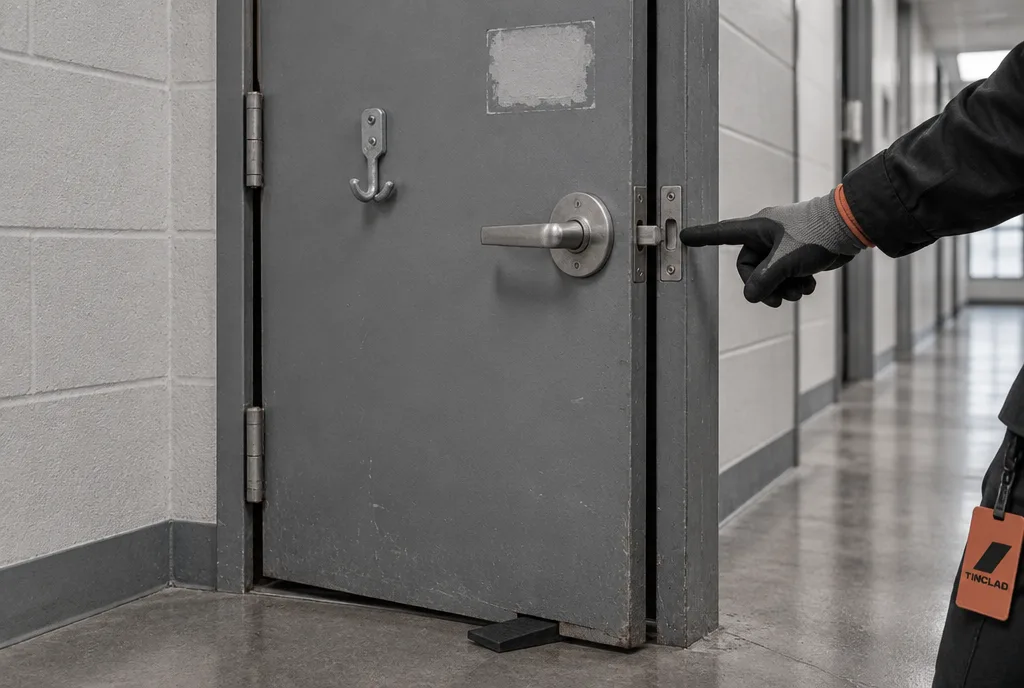
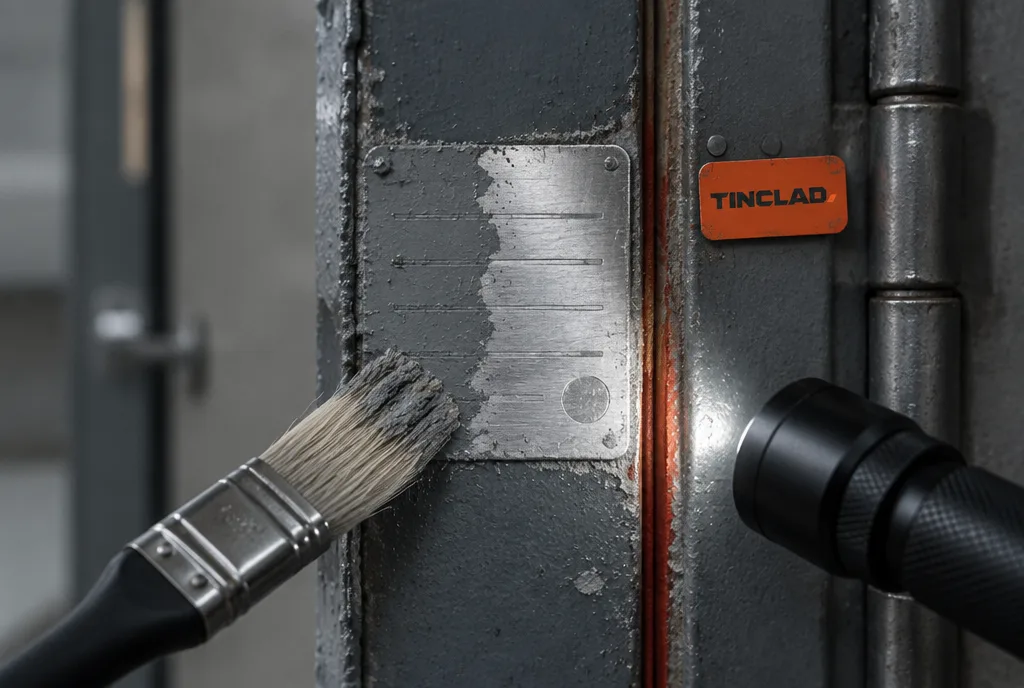
Fire doors pick up extras over the years: kick plates, room signs, peepholes, new locks. Some of these are allowed. Others void the label and turn a good door into a citation. The rule of thumb is simple: if it was not tested with the door, or is not on NFPA 80's short list, ask first. Here is how each one works.
Why changes matter
A fire door is tested as an assembly: door, frame, hardware and glass together. The label says that assembly passed. When you cut, drill or add something the test did not cover, you may no longer have a rated door. NFPA 80 allows a short list of field changes. Anything beyond that needs approval from the door manufacturer or the lab that lists the door, or it means a new door.
Surveyors check for this. Two of the 13 items on an NFPA 80 inspection cover it directly: no field changes that void the label, and signs that meet the size and attachment limits.
Kick plates and protection plates
Kick plates, mop plates and armor plates are common on fire doors, and they are allowed. NFPA 80 permits protection plates to be installed in the field. The catch is height. Plates up to a set height can go on in the field. Taller plates, like full armor plates, generally must be labeled for use on fire doors, on a door whose listing allows them.
Before you order, check the door's listing or ask the manufacturer what plate heights the door accepts. During an inspection we note plate heights on every door, because surveyors look at them.
Signs
Room numbers, "keep closed" signs and wayfinding panels all end up on doors. NFPA 80 allows signs, with limits on how big they can be and how they are attached. The attachment rule is the one most often broken: signs go on with adhesive, not screws, nails or rivets. Every screw is a hole through the door that the test did not include.
If a sign is screwed on now, taking it off leaves holes that must be filled the right way. For size, keep signs small and check the current NFPA 80 limit or the door manufacturer before ordering large panels.
Peepholes and door viewers
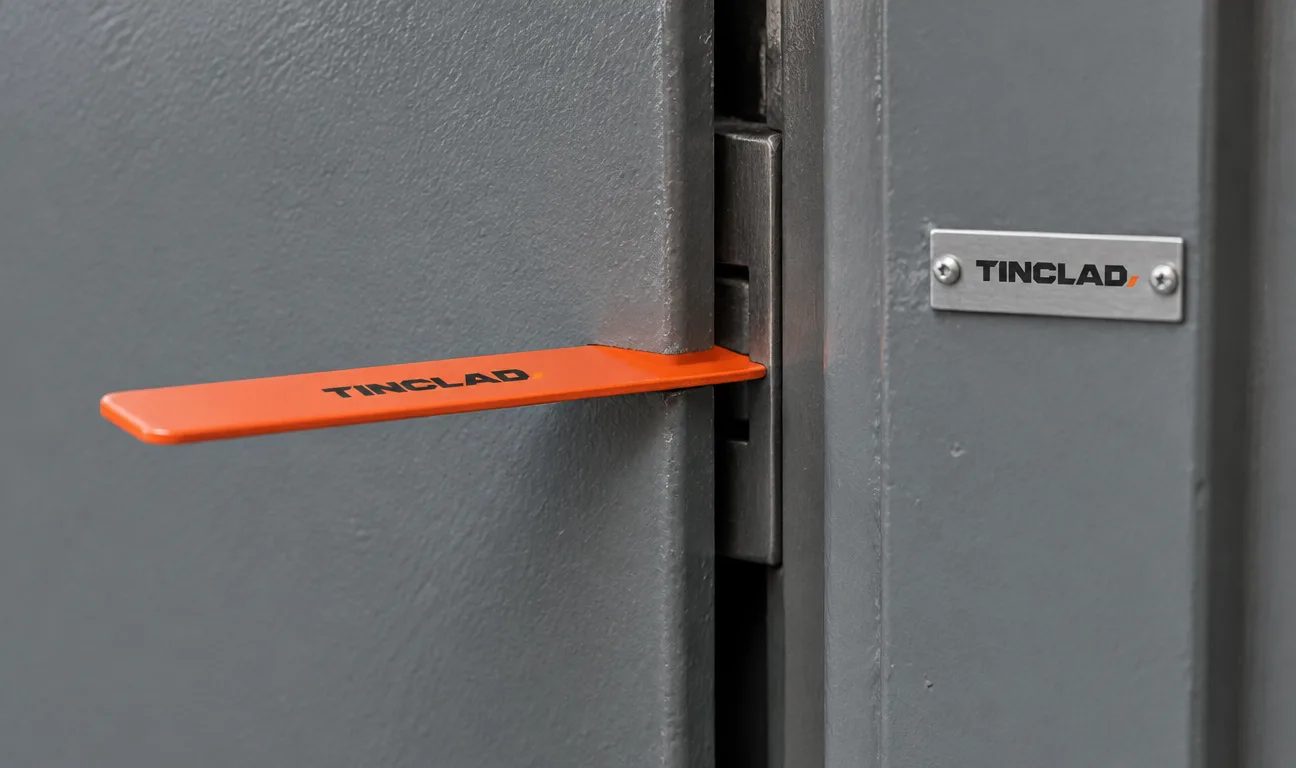
A viewer means a hole all the way through the door. Viewers can be used on fire doors, but only listed viewers, installed the way the listing allows. A standard hardware store peephole is not fire-rated. Check the door's listing or the manufacturer for which viewers and hole sizes it accepts. If people need to see through the door, a listed vision kit may be the better answer.
Glass and vision kits
Glass is not a casual add-on. A vision kit has to be listed for the door's rating, with glass and frames that match. Cutting a new opening in an existing fire door generally voids the label unless the manufacturer or listing lab approves the work. Replacing broken glass is fine, but only with glass listed for that opening.
Locks, hardware and old holes
New hardware. Locks, exit devices and closers on fire doors must be listed for fire doors. Added bolts, chains or hooks that stop the door from closing and latching on its own are a failure.
Old holes. When hardware comes off, the holes it leaves must be filled properly, usually with steel fasteners or the same material as the door. Tape or a sticker over the hole does not count.
Cut-downs. Trimming the bottom of a door to clear new flooring changes the bottom gap and can void the label. Check the listing before anyone cuts.
When in doubt, ask before you drill
The safe order is simple. Read the label for the manufacturer and listing lab. Ask them whether the change is allowed on that door. Get the answer in writing and keep it with your inspection records. A short call costs less than a new door.
What to do next
If your doors have years of add-ons, an annual fire door inspection will show which ones void the label and which are fine. We fix what we can on the visit, and our fire door repair team prices the rest with listed parts. Request a quote or call (610) 684-9715.
Insights