A Form CMS-2567 lands after a survey, and the life safety pages can be hard to read. Each finding follows the same pattern: a tag, the rule, and what the surveyor saw. Once you know the layout, you can turn every finding into a repair list and a plan of correction. Here is how we read them.
What the 2567 is
Form CMS-2567 is the Statement of Deficiencies and Plan of Correction. CMS and state survey agencies use it to record the deficiencies found during a survey. Life safety findings are cited by K-tag, so fire door, damper and firestop problems show up with a K number in front of them.
The form has two sides. The left side is the surveyor's: the tag and the finding. The right side is yours: the plan of correction and a completion date for each one.
The parts of a finding
The tag
Each finding starts with a K-tag that tells you which part of the Life Safety Code it falls under. The tags we see most in our work:
K211: fire doors not tested annually or failing NFPA 80
K321: doors to hazardous rooms that do not self-close or latch
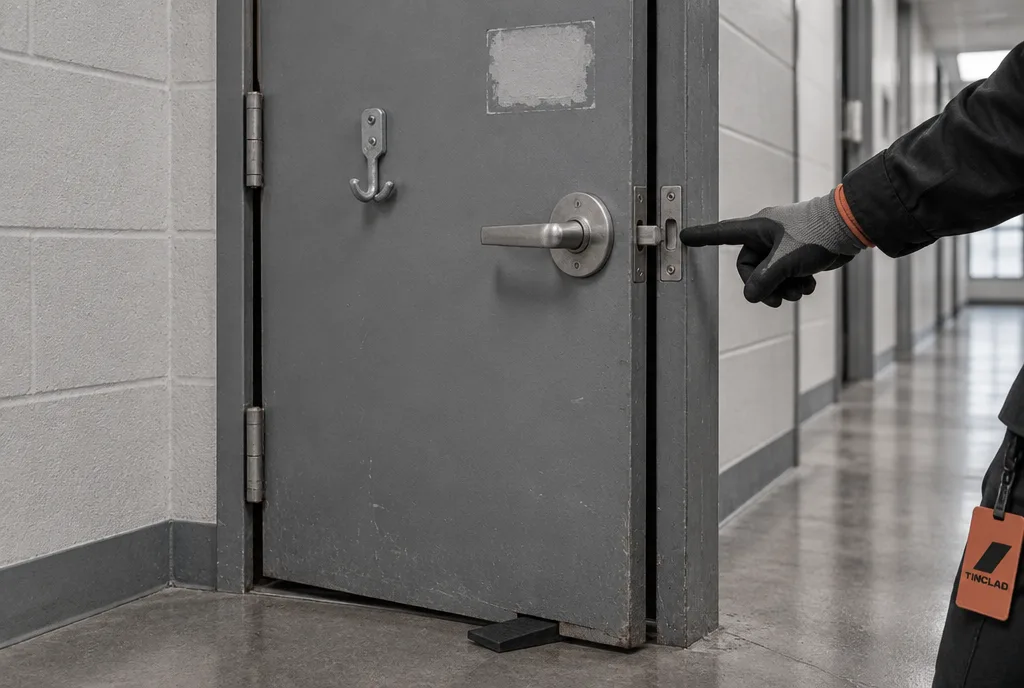
K363: corridor doors that do not latch or have gaps
K372: open penetrations in smoke barrier walls
K374: smoke barrier doors that do not close or seal
K521: dampers not tested or not working
Our CMS K-tags guide covers each one.
The rule
Next comes the code text behind the tag, usually from the 2012 Life Safety Code or a standard it references, such as NFPA 80. This part reads the same on every 2567 that uses that tag. Skim it.
The evidence
This is the part that matters. It usually opens with a line saying the requirement is not met, then describes what the surveyor saw. Look for:
Locations. Room numbers, corridors, smoke compartments or door IDs
The defect. A door that failed to latch, a gap over the limit, an open penetration around conduit
The count. How many doors, dampers or penetrations were found
Who confirmed it. Surveyors often note that a staff member saw the problem and agreed
Records. Whether your inspection or test records were missing or incomplete

Read it as a sample, not a full list
A surveyor walks part of your building, not all of it. If they found four doors that do not latch on two floors, there are likely more on the floors they did not visit. A plan that fixes only the four doors on the form leaves the same problem waiting for the next survey. A good plan fixes the cited items, checks the rest of the building for the same problem, and shows how you will keep it from coming back.
Turning findings into a plan
List every cited item. One line per door, damper or penetration, with the tag and location.
Walk the findings. Confirm each one and note the cause. A door that does not latch might need a strike adjustment or a new frame. The fix changes the date.
Look for the same problem elsewhere. If records were the issue, check that your inspection list includes every rated door and damper.
Set realistic dates. Each finding needs a completion date. Plan around parts lead times and access to the space.
Document the fix. Photos, a re-test and a dated record for every item. That record is your evidence.
Watch the clock
Your plan of correction is usually due within 10 calendar days of receiving the 2567. That is not much time to walk findings, price repairs and set dates, so start the day the form arrives. If The Joint Commission also cited door or barrier findings, it sets its own deadline for evidence of compliance. For hospitals, those findings now score under PE.03.01.01.
What to do next
If you have a 2567 with door, damper or firestop findings, our Priority Repair for survey citations walks the findings within 2 business days and gives you a written plan with dates, ready to attach to your plan of correction. Every repair is photographed, re-tested and listed in a close-out report. Request a quote or call (610) 684-9715.
Insights